
James City County Property Tax Records
Property tax information in James City County lives in two places. The assessment roll carries the value side, while Treasurer accounts carry the billing side. The county's Property Information System blends assessment data with GIS map layers, and it can show ownership, source of title, sales and transfer history, land and building details, and past assessments. The Land Book stays simpler. It lists the owner of record, the assessment, and the taxes levied. For what was billed, paid, or left unpaid, the Treasurer's systems hold the answer instead.
| Field | What It Shows | Where |
|---|---|---|
| Owner and parcel | Assessment owner, parcel ID, and map cross-reference | Property Information System / Land Book |
| Assessed value | Value used in the county assessment and tax process | Real Estate Assessments |
| Assessment history | Prior assessment information advertised by the county | Property Information System |
| Taxes levied | Amount charged against the parcel for the tax period | Land Book / Treasurer |
| Bill and payment status | Invoices, prior information, and account status | Treasurer ePayment |
A few limits are worth knowing. James City County does not publish a market or appraised value as a field in its portal. No local exemption list appears there either. A tax record will not spell out every adjustment an owner might claim. The assessment drives the tax bill. A recent sale price is only a separate record clue. It is not an official appraisal of the parcel.
James City County Biennial Assessment
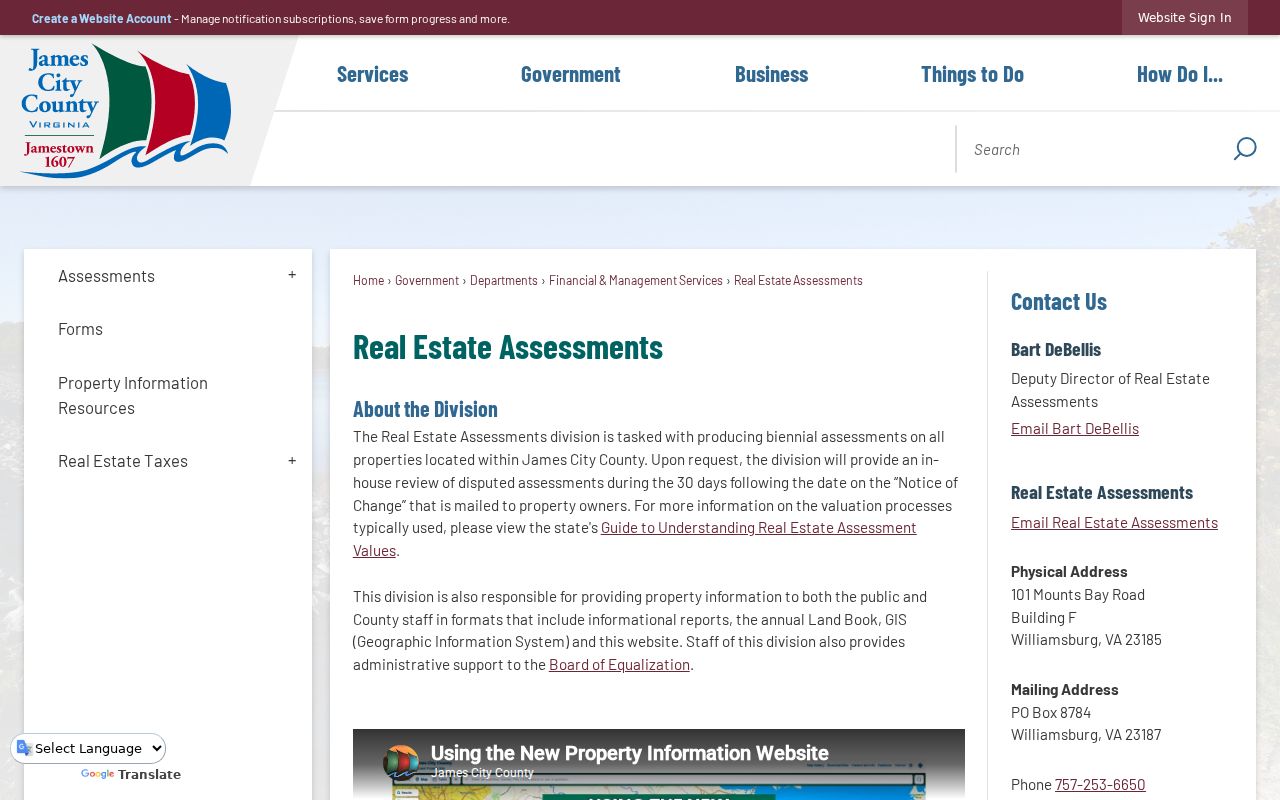
Real Estate Assessments values every parcel in James City County on a biennial cycle. The division feeds the annual Land Book. It shares public information through the Property Information System and GIS map tools. Always read a tax record alongside its assessment year. Values do not reset each month. A transfer, improvement, or parcel change may surface in another property record. The updated roll may not catch up right away.
An in-house review is available after a Notice of Change. The office's own page explains how to request that review. It outlines Board of Equalization support. This route fits when the assessed value itself is the problem. Billing disputes, payment posting, and missing invoices belong with the Treasurer. The Real Estate Assessments review page describes the biennial cycle and the review route.
Assessment From the Prior July
A real-estate tax bill in James City County rests on the assessment dated the previous July 1. That lag explains why a bill can trail a recent sale or a market shift. Three numbers get confused easily. The assessment is the taxable value the county uses. A sale price is what the parties reported to the deed records. A market appraisal is a separate professional opinion.
The county's property tax page notes that the Board of Supervisors sets the rate each year. Comparing two bills? Check the assessment date, the parcel description, and the rate year before blaming any single factor. If the value looks wrong, use the Assessment division's review route. An ePayment balance is not a valuation appeal.
Check James City County Tax Bills
The Treasurer posts tax invoices and past account details through ePayment. Start with a known address or parcel number. Then match the result against the county assessment record. A bill lookup belongs to the Treasurer even when the parcel card supplied the number. Phone payments are also an option. The Treasurer can sort out accounts with no bill showing online.
- Open the county ePayment service from the Treasurer's tax page and choose the property-account route.
- Search the parcel or account details the service requests, then review the invoice and prior information shown.
- Compare the account with the assessment and Land Book when the value or tax basis is in question.
- Call the Treasurer if the bill is missing, a payment is not reflected, or the account appears delinquent.
- Assessed value
- The value used to calculate the county's real-estate tax charge.
- Prior July 1 basis
- The assessment date used for the tax bill under the county's published rule.
- Tax rate
- The annual amount applied per $100 of assessed value.
- Tax lien
- A recorded claim related to unpaid taxes; verify both the Treasurer account and Clerk record.
James City County ePayment Accounts
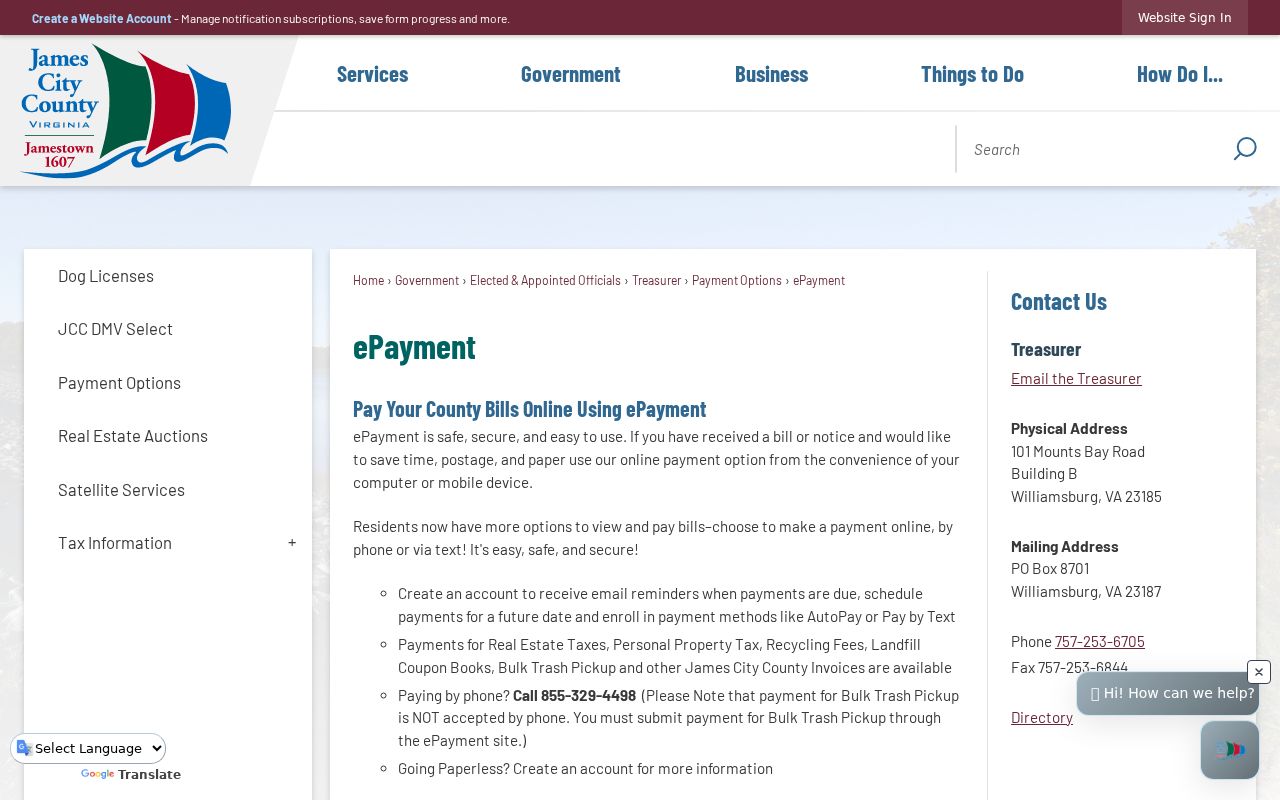
James City County routes ePayment users to InvoiceCloud for account and tax invoice access. The tool shows invoices and takes payments. It does not challenge assessments. Account, ACH or e-check, card, and phone options are all described in the county's material. Some invoice details sit behind an account. A public overview may not display the bill itself. Use the parcel or account number from county property records. Contact the Treasurer when a payment will not match.
The county's ePayment page shows the account route rather than a sample tax bill. It works alongside the Treasurer page, which lists due dates and payment responsibility. Save your payment confirmation. Verify any disputed balance with the office that keeps the account. Go to the county's ePayment tax invoice page to view the current account route.
June and December Tax Due Dates
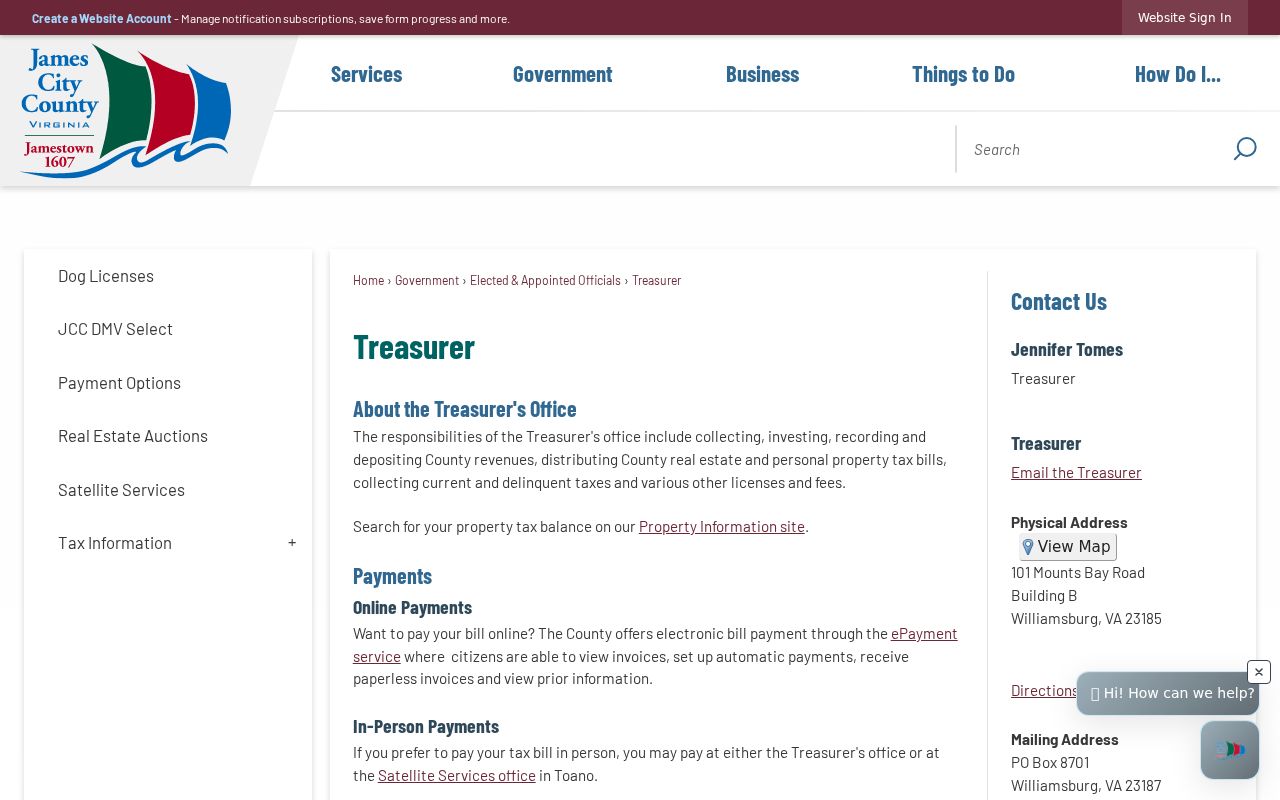
Real-estate taxes are due June 5 and December 5. The Treasurer distributes semiannual bills and collects current and delinquent taxes. If a bill does not arrive, the county says the taxpayer remains responsible and should call the Treasurer at 757-253-6705. The office is at 101 Mounts Bay Road, Building B, Williamsburg, Virginia 23185, and its published hours are Monday through Friday, 8 a.m. to 5 p.m.
A 2025 notice described drop-off locations and a 2.95% card convenience fee; the notice said e-check had no fee for that bill cycle. Those terms are time-specific. Check the current Treasurer notice before choosing a payment method, because the charge and options may change.
To check a bill against the county record, keep the parcel ID, tax year, assessment period, and payment confirmation together. The Land Book includes the owner, assessment, and taxes levied, and it can be consulted at Real Estate Assessments, the Treasurer, or the Circuit Court Clerk. Those entries provide a way to reconcile the parcel and levy, while the Treasurer remains the office for the live balance and receipt of a payment.
The James City County Treasurer page lists bill timing, contact information, and payment resources.
Review a Notice of Change
A Notice of Change opens a short review window. James City County gives owners an in-house review. Owners must ask within 30 days of the notice. Pull together the parcel ID and the notice itself. Also gather the facts behind the disagreement, such as a property description or a documented change. Real Estate Assessments can explain how to submit the request and what material it needs. The county publishes no universal form or separate filing fee for this step.
Keep the review separate from the tax bill. Calling the Treasurer about an amount due does nothing to preserve the assessment window. The dispute may move past the in-house stage. In that case, the county's assessment page also lists support information for the Board of Equalization. Confirm current dates and procedure with the county rather than an old notice.
30-day review period. Request the county's in-house review within 30 days after the Notice of Change. The published research does not establish a separate general appeal calendar beyond that step.
Supplemental Bills and Delinquency
James City County tax material notes supplemental bills for completed homes or additions. A new improvement can hit the tax record after the regular assessment cycle. That is why a second bill deserves a close look. Compare the parcel's building description, assessment date, and bill period before assuming a duplicate charge. The Treasurer handles the account balance and any current or delinquent taxes. Real Estate Assessments keeps the valuation record.
The county publishes no set delinquent-list format or tax-sale calendar on its pages. For a delinquency question, start with the Treasurer's account or office. A recorded tax lien is a different matter. Search the Clerk's land records for it. Request the instrument itself if needed. A balance or notice alone proves nothing about whether a sale or transfer was completed.
A supplemental charge also warrants a period check. A finished house or addition can enter the tax record after the regular biennial valuation. So a second bill may cover a different stretch of the year rather than repeat the same levy. Put the dates, improvement description, and parcel number from both notices side by side. If the improvement or assessed amount looks wrong, take it to Real Estate Assessments. If the amount due or a payment is the problem, use the Treasurer's account route.
Never treat an assessed owner and a deed grantee as the same party. Someone who paid a bill is a third thing entirely. The Land Book describes the county's assessment and taxes levied. The Treasurer maintains billing and collection. The Clerk holds recorded instruments. Each office can verify the piece of the transaction it keeps.
Appeal a James City County Assessment
Assessment questions belong at Real Estate Assessments, not the payment portal. James City County's biennial cycle includes an in-house review after a Notice of Change, and the request must arrive within 30 days of that notice. The division also supports the Board of Equalization. Ask the office for the current process, the required evidence, and any dates that apply to the parcel before filing.
Appeal window. James City County's published in-house review period is 30 days after a Notice of Change. The research did not verify a broader fixed appeal deadline, so confirm the next step with the assessment office.