
Trace James City County Former Owners
The newest deed for the parcel anchors the search. Its grantee is the name you hunt next, this time as a grantor. A source-of-title recital may name that earlier instrument outright. James City County chains often cross deeds, deeds of trust, releases, plats, and probate transfers. Keep every transfer tied to one legal description. Shared surnames never prove two deeds cover the same land. Treat any timeline as a reading frame, not a claim about one owner's history. Fill each row from the instrument itself. Check the book, page, or document number before stepping back to the prior grantor.
| Transfer Date | Grantor to Grantee | Deed Type | Book/Page |
|---|---|---|---|
| Date shown on the newest instrument | Latest grantor to current grantee | Read from the recorded deed | Copy the exact reference |
| Date shown on the source deed | Prior grantor to prior grantee | Read from the earlier instrument | Follow its book/page or number |
| Date in the deed book | Earlier transfer parties | Check the volume's index | Record the original citation |
| Date on a plat or probate deed | Estate, heir, or subdivision clue | Confirm the linked instrument | Compare legal description |
Recent transfers begin with the Clerk's remote land-record index. For the older chain, the index coverage date hands you off to deed books, courthouse research, and Library of Virginia microfilm. A tax roll can corroborate who was assessed in a given period. Recorded transfers still run through the deed index.
James City County Deed Coverage
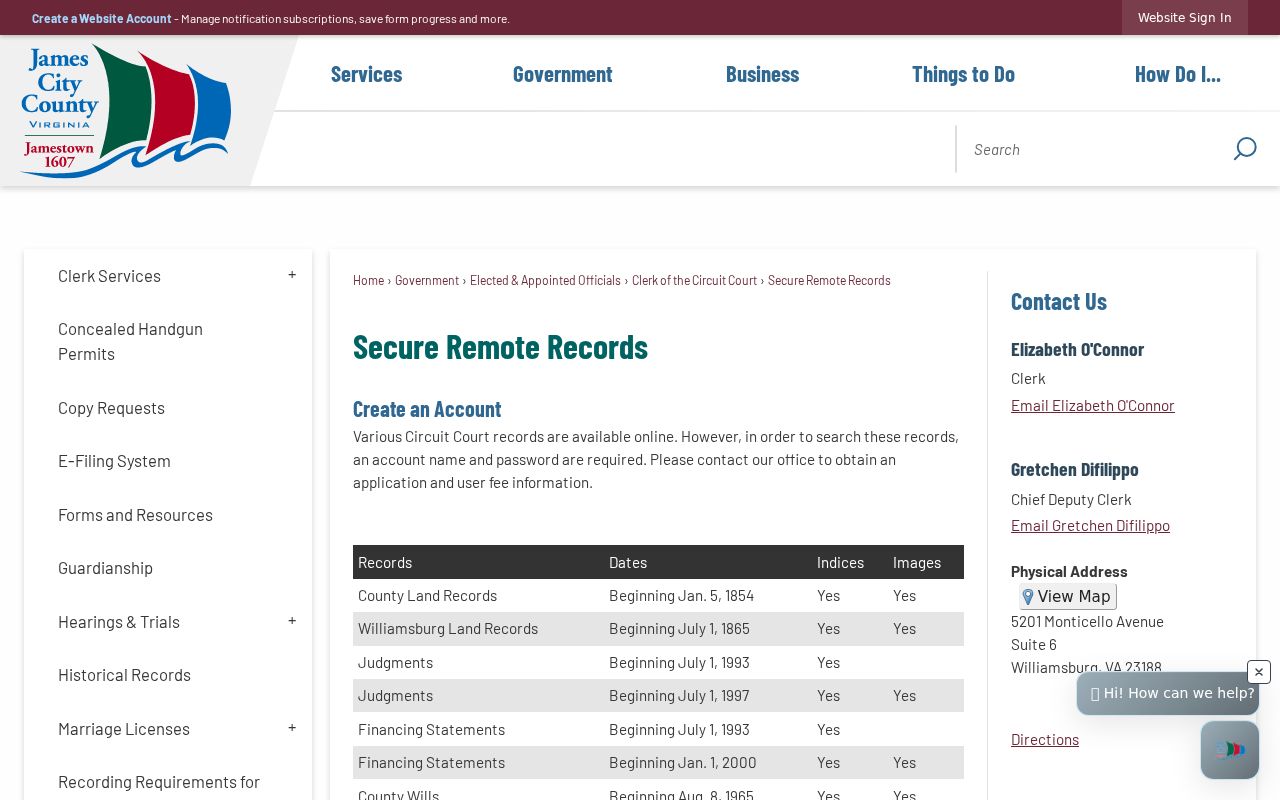
That remote start date divides online research from older-source work. James City County land records begin January 5, 1854. Williamsburg's separate series starts July 1, 1865. The county itself dates to 1634 as a political unit, yet that does not place every colonial record inside the modern online deed index.
| Record Series | Remote Start | Next Source When Older | Research Use |
|---|---|---|---|
| James City County land records | Jan. 5, 1854 | Clerk, deed books, Library of Virginia | Trace county transfers backward |
| Williamsburg land records | July 1, 1865 | City Clerk series and archives | Keep the independent city separate |
| County wills | Aug. 8, 1965 | Clerk and historical sources | Check an estate transfer |
| Williamsburg wills | Nov. 12, 1857 | City series and archives | Check an older probate link |
Remote access carries costs and rules. The system charges $150 per user per quarter. Approved user IDs are required. Its images may not serve as the official government copy required by law. The Clerk's own coverage table lays out the time span and account terms before a search begins, so review the remote records coverage table.
Walk the James City Deed Chain Backward
Begin with the newest instrument tied to the parcel. That deed's grantee becomes your next grantor. The prior deed then names another grantee. The loop repeats. At every step, confirm the same legal description or source-of-title reference. It must follow the land through time, or the chain may not be the same chain at all. A name match without a parcel match splices unrelated chains together.
- Find the latest deed where the assessed owner or known grantee received the parcel.
- Copy the grantor, grantee, recording date, instrument number, and legal description.
- Use the prior grantor as the next grantee search and follow the deed's source reference.
- Compare each description and citation, then continue until the remote coverage date requires an older source.
- Grantor
- The party shown as conveying an interest in a deed.
- Grantee
- The party shown as receiving that interest.
- Chain of title
- The ordered sequence of recorded transfers tied to the land.
- Reverse index
- A party search that follows transfers from grantee back to grantor.
- Legal description
- The instrument's description of the parcel, which can outlast a street address.
Read the Source-of-Title Clue
Many deeds cite the earlier instrument that gave the grantor the land. That source-of-title recital is gold. It shortens backward searches. It can also separate a same-name person from the true owner of record. Record every book, page, and instrument number exactly. The Clerk's remote interface searches by party name, recording date, book and page, and instrument number. Document-type and parcel labels vary, so confirm them with the Clerk.
Punctuation matters too. The Clerk advises VADeed Alert users to try O'Brien and O Brien, or Smith-Jones and Smith Jones. The same care aids a former-owner hunt, where a changed surname, initials, or an entity suffix can hide an earlier deed. Try both spellings. Then confirm the parcel, not the spelling. Broader deed mechanics and copy routes appear on the James City County deed records page.
Reach Before 1854 in Virginia Microfilm
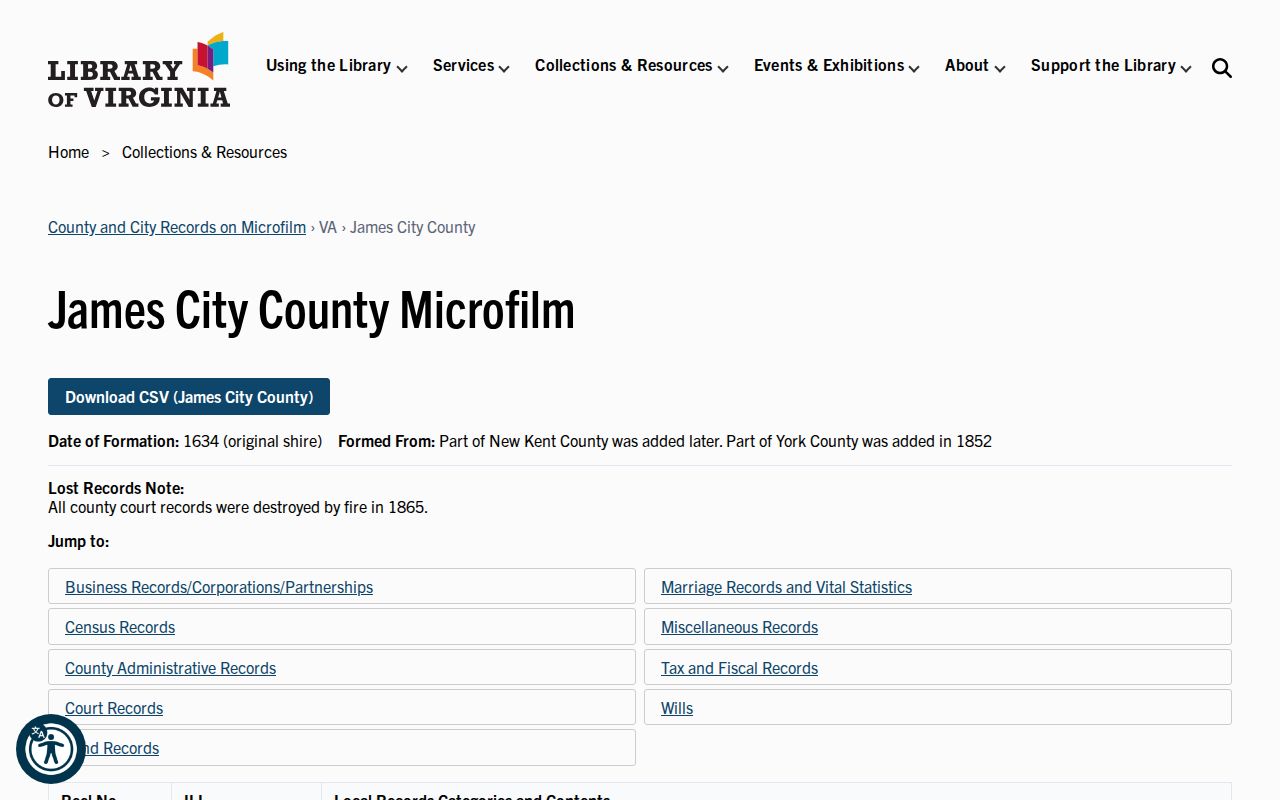
Older chains need older sources. The Library of Virginia's James City County finding aid is the place to begin. It points researchers to county microfilm and formation context. The first deed-book year and local city-directory runs are questions for the library or Clerk, which can name the volume or film covering a known parcel and date.
Search with the current owner or prior grantor name. Add an approximate date and any deed-book reference. A subdivision name or legal description narrows the request further. A reading-room visit, archive catalog, or courthouse index can surface material the remote portal does not hold. Some records simply live outside the portal. Start from the Library of Virginia James City County finding aid.
Use Plats to Place Former Owners
A subdivision plat can link an old deed to a current lot. The recorded-plat directory searches by Plat Book and Page or instrument number. ByPIN and ByDeed paths also exist. Chickahominy Haven Section 3-A, recorded in 1960, shows lot numbers, roads, bearings, drainage easements, a vicinity map, the source deed, surveyor certification, and clerk admission. Its references run to Deed Book 75, Page 195 and Plat Book 18, Page 18.
A plat is a map, not an owner list. Use the lot and section to find the deed. Then follow the grantor and grantee chain from there. The online image is not a certified copy, and a later plat may supersede an older layout. The Clerk can certify maps at the courthouse.
James City County Probate Transfers
A death can scatter the paper trail. In James City County, the deed index, the probate file, and the assessment roll each hold one piece of it. The Circuit Court Clerk qualifies executors and administrators and records wills and probate matters. Executor instruments may sit there too. Search the decedent in the land index. A deed to an heir, a fiduciary deed, or a release may surface, sometimes followed by a later sale.
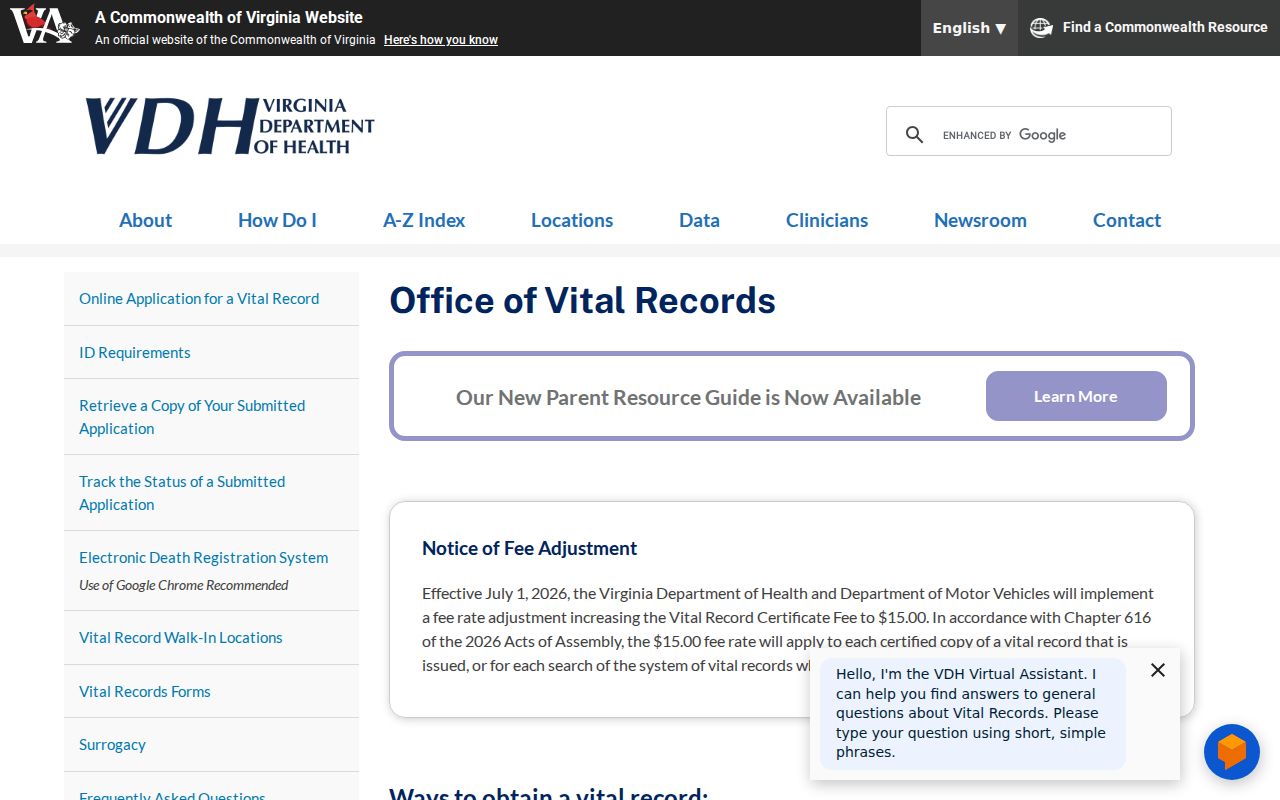
Then consult the probate file. The will and estate papers explain the transfer. A death certificate proves death, not title. Virginia vital records open to the public 25 years after a death, marriage, divorce, or annulment, and 100 years after a birth. Earlier certified copies go only to eligible requesters, and the statute allows a fee of up to $15. For a live request, use the VDH application route and rely on the Clerk's deed or probate record for transfer evidence.
The Virginia Department of Health Vital Records page is the state application gateway.
How Far James City County Records Reach
James City County dates to 1634. Its remote land-record series, though, starts in 1854. Earlier work means deed books, microfilm, and archives. The Library of Virginia finding aid is a sound first step. A gap online is not a lost deed. The search should move to a different index or repository before concluding a record is gone.
Older documents may carry a legal description, a lot and section, or a party name that differs from the modern tax card. That mismatch trips people up. Historical directories, newspapers, census schedules, and probate records can help identify a household or an heir. Still, the Clerk's deed establishes the recorded transfer. When the search needs to come forward again, the current James City County owner record is the place to start.
Lawful use. Former-owner research can support house history, estate work, or a property review. Do not use a past owner's record to track, threaten, or harass a living person.